

Learning Catalog Redesign
The Learning Catalog wasn't just selling courses. It was asking professionals to invest in where their careers could go next. I wanted the cover to make learning feel dynamic, relevant, and connected to the future of the profession.
Round One: Exploration
I was new to IIA and working with a marketing manager who was also new to the brand, so the first round was intentionally broad. Without an established creative direction for the project, I explored a wide range of options using stock imagery transformed to feel distinctly IIA. I leaned into a darker, more sophisticated palette and used composition, cropping, and brand elements to turn familiar imagery into something more personal to the brand. The goal wasn't to find the answer immediately. It was to create enough contrast between directions to discover what felt right for the brand.

Round Two: Refinement
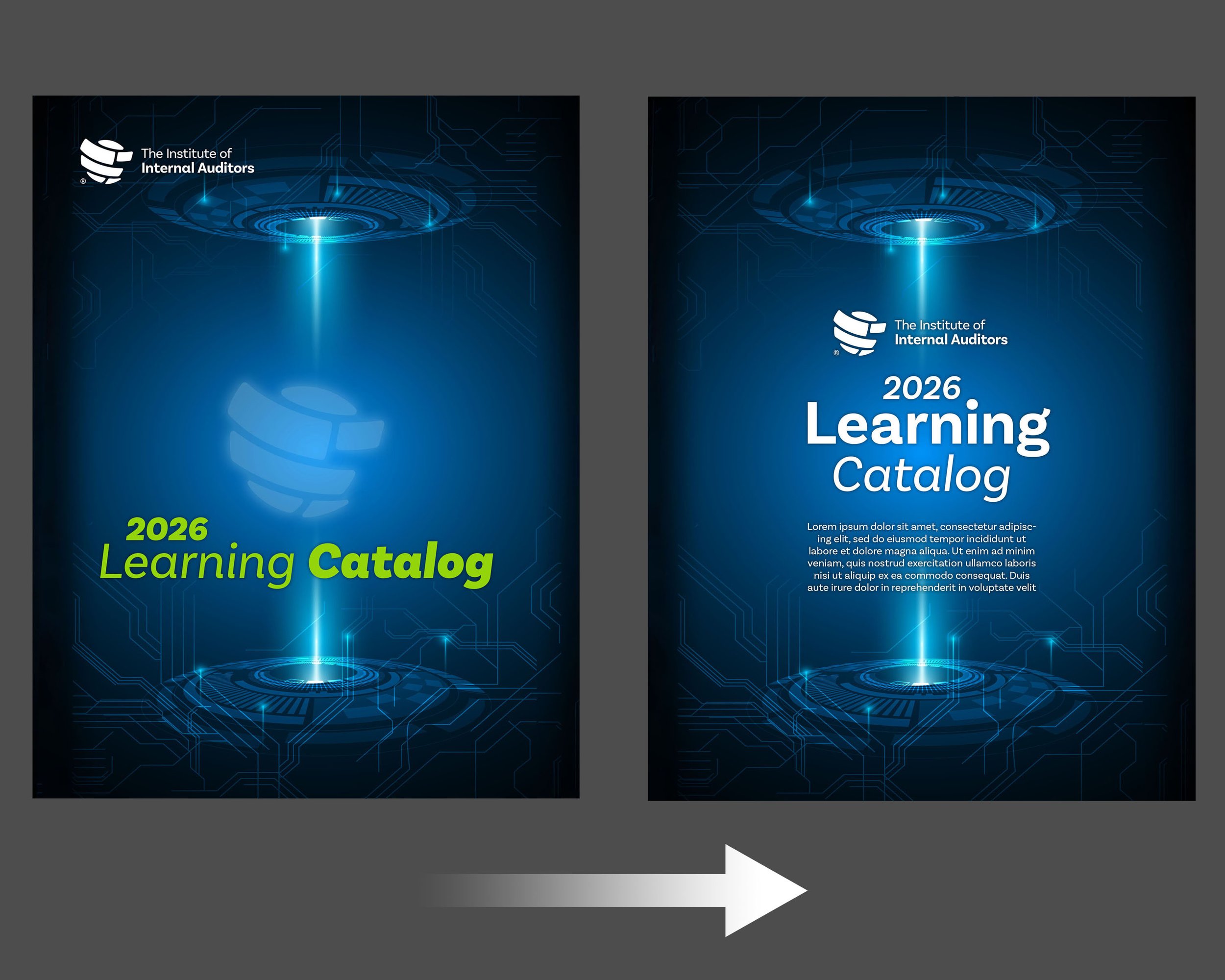
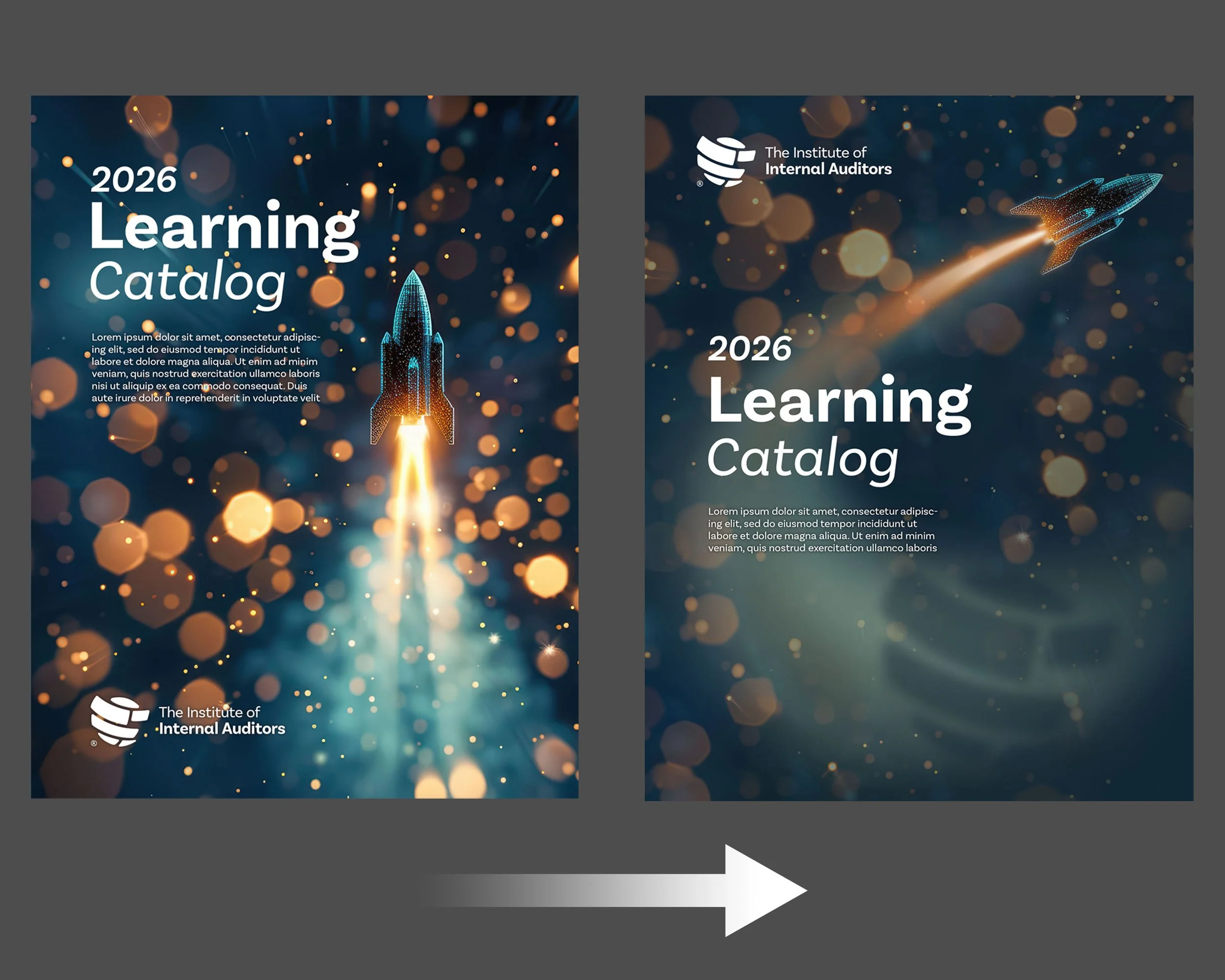
Three concepts were selected by the Business Unit for further development, each representing a future-forward vision of internal audit. I refined the strongest elements of each direction, exploring how imagery, typography, and composition could communicate a profession that is evolving, modern, and ready for what’s next.

Round Three: Interpreting Feedback
The refined concepts still weren't the answer. While the VP couldn't articulate exactly what he wanted, his previous feedback offered clues: he responded to the sense of movement in one concept and the color and energy of another, but didn't want either execution.
That left me to interpret the why behind his reactions rather than simply make the changes he requested. I went back to the drawing board, carrying those attributes forward into an entirely new direction.


Final Direction
The final cover combined the movement of one concept with the color and energy of another, while looking distinctly different from either. Rather than taking the feedback literally, I translated the qualities the VP responded to into a new visual direction. The result clicked immediately: he described feeling as though he was right in the middle of the stream, moving toward the future.
The solution wasn't one of the original options. It emerged from understanding what the stakeholder was responding to beneath the execution.